Category: Global

  • The EU’s Eastern Flank in June 2026

    The EU’s Eastern Flank in June 2026

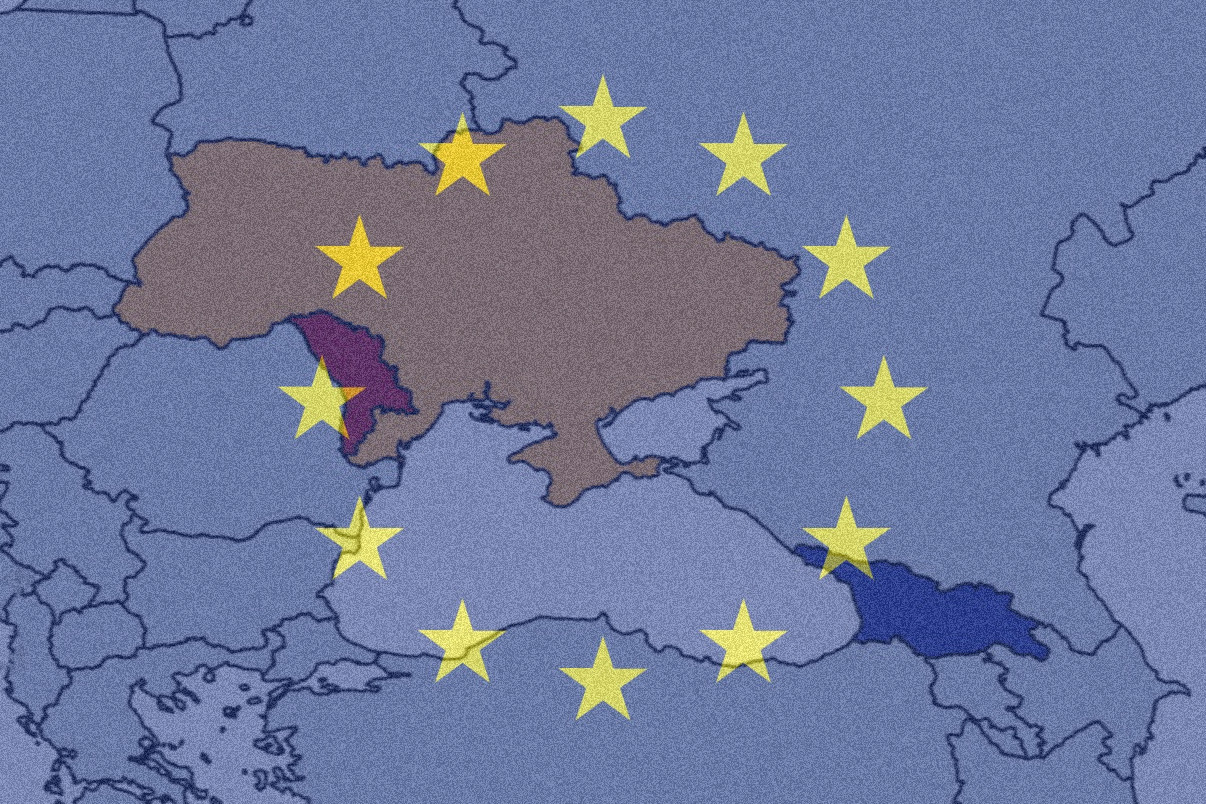
    June 2026 has solidified a sharp divide between the European Union and its Eastern flank. In just one week, Ukraine and Moldova have reached a milestone that had been blocked for almost two years, while Georgia, hailed as an “inspiring leader” among Eastern Partnership nations, continued to languish in a state of self-imposed isolation. The differences of these three candidate countries provide a valuable lesson on the mechanics of EU enlargement and on the impact of geopolitical alignment, domestic politics, and democratic commitment on a country’s European future.

    A Historic Breakthrough – For Two?

    On 15 June 2026, under the Cypriot Council presidency, the European Union formally launched the first cluster of accession negotiations, the cluster on “Fundamentals” with Ukraine and Moldova (Council of the EU, 2026). The most important cluster in the accession process is the cluster of the rule of law, fundamental rights, functioning of democratic institutions, public administration reform, and economic criteria. It is the first open and the last closed, and thus its progress sets the pace for all others (European Commission, 2026a).

    It was a long time coming. The formal launch of the cluster talks had been blocked in Hungary since 2024 due to concerns about the rights of the Hungarian minority in Ukraine’s Transcarpathia region. The deadlock only ended when Viktor Orbán’s government collapsed in the 2026 Hungarian parliamentary elections in April. Within weeks, new Prime Minister Péter Magyar negotiated a deal with Kyiv, allowing Budapest to remove its veto (Al Jazeera, 2026). The speed was remarkable: Magyar himself noted that his government had achieved in three weeks what the previous administration had failed to accomplish in ten years (New Union Post, 2026a).

    It was a very symbolic and practical moment for Ukraine. The negotiations on accession are conducted in six thematic clusters, while the remaining ones cannot be finalized until the benchmarks of Cluster 1 (Time, 2026) are fulfilled. In September 2025, Ukraine had already gone through the EU bilateral screening process and had adopted a national program to implement the EU acquis. Some chapters may be closed as early as 2026, and the Accession Treaty might be drawn up and signed in 2027 (New Union Post, 2026b). On 1 January 2026, Ukraine also became part of the EU’s roaming area, which represents a concrete advantage for citizens (Council of the EU, n.d.). There may be some resistance to the idea of progress, but it is real.

    Moldova’s trajectory is even more interesting, especially in the context of the small country’s limited resources. Chișinău has quietly built up a good reform record, having gone through its own screening process in September 2025 and having in place 28 out of 30 reforms required under the EU’s Growth Plan, securing €504 million in disbursements to date (New Union Post, 2026c). At the EU-Moldova Summit on 22 June 2026, Commission President von der Leyen made it clear: “When a candidate country performs the way Moldova does…, it deserves to move on. A merit-based process is not a slow process, it is a fair process” (Euronews, 2026). Since then, Moldavian President Maia Sandu has urged the remaining five clusters to be opened up right away, calling it a race against time (New Union Post, 2026c).

    A major issue now on the table for both countries is whether Moldova should be separated from Ukraine’s path to accession. The two bids have been tied since 2022, and it was a political decision, based on the logic of the Eastern Partnership. The formal process, which is currently underway, calls for different reforms at different speeds, however. EU officials have started to recognize that there is a possibility for decoupling (Euronews, 2026). For Moldova, a country at peace, with a long-term goal of joining a pro-European country and a consistently pro-European government, this adds unnecessary delay to its path to joining a country still engaged in conflict.

    Georgia’s Frozen Path

    Georgia shows the opposite scenario. The country was granted EU candidate status in December 2023, together with Ukraine and Moldova, and has experienced a “serious democratic backsliding, with a fast deterioration of the rule of law and fundamental rights” (European Commission, 2025). The ruling Georgian Dream party, which is supported by oligarch Bidzina Ivanishvili, enacted a foreign agents law similar to the one adopted by Russia and implemented other broad anti-LGBTQ+ measures while also orchestrating a parliamentary election in October 2024 that international observers described as neither free nor fair (RFE/RL, 2025).

    The results were immediate. In November 2024, Prime Minister Irakli Kobakhidze announced that Georgia would suspend its EU accession process until 2028, sparking the largest wave of street protests since Georgian independence (Wikipedia, 2026a). The European Parliament passed a resolution that condemned the election results and requested new elections (European Parliament, 2025). In March 2026, the European Commission (EEAS) applied the new visa suspension mechanism for the first time, cancelling visa-free travel for holders of Georgian diplomatic, service, and official passports. It is in effect until March 2027 and can be expanded and spread to the Georgian people if the situation gets worse. EU Commissioner Magnus Brunner said simply, “There is no room for anyone who is a representative of repression in our Union” (Washington Times, 2026).

    Further, in the Commission’s 2025 report, Georgian candidate status was called “only on paper” (EU Neighbours East, 2025). This is not just a matter of rhetoric: Georgia has not done anything of the nine reform steps that are needed for the start of accession negotiations. Opposition leaders have been arrested, independent media have been attacked, and civil society groups have had their bank accounts blocked for alleged protest activities (Human Rights Watch, 2026). According to a survey conducted early in 2026, a majority of Georgians (71%) still wish to be a member of the EU, but their own government is holding them captive (Wikipedia, 2026b).

    What This Divergence Reveals

    What Georgia, Ukraine, and Moldova have in common is a stark lesson about the process of enlargement: it is based on the act of commitment, not the word. Georgia’s government professes to support EU membership in principle but systematically undermines the democratic structures and processes required to join the EU. Ukraine is in a full-scale war and is taking measures to implement judicial reforms and conform to the EU acquis in conditions none of the previous candidates have faced. In the face of intense Russian geopolitical pressure, Moldova has met its reform targets regularly.

    The Eastern Flank divergence also has a wider message for the EU’s instruments of influence. If applied rigorously, the merit-based enlargement process gives genuine incentives for reform. But it can also be used: the government can be frozen in place, it can take the sanctions into its stride, and it can claim victimhood status and still have the nominal status of having the status of a candidate. The issue for Brussels is whether a ‘candidate country in name only’ should always stay in that category or whether there is a need for clearer-cut criteria for suspension.

    What the future of the Eastern Partnership in Europe looks like was demonstrated in June 2026. The way to Brussels is now officially open for two of its members. For the third, it hasn’t started yet.

    References

    Al Jazeera. (2026, June 12). EU agrees launch of accession process for Ukraine and Moldova. https://www.aljazeera.com/news/2026/6/12/eu-agrees-launch-of-accession-process-for-ukraine-and-moldova

    Council of the EU. (2026, June 15). EU and Ukraine open first accession negotiations cluster. https://www.consilium.europa.eu/en/press/press-releases/2026/06/15/eu-and-ukraine-open-first-accession-negotiations-cluster/

    Council of the EU. (n.d.). Ukraine. https://www.consilium.europa.eu/en/policies/ukraine/

    EEAS. (2026, March 6). Commission suspends visa-free travel for Georgian holders of diplomatic, service or official passports under the revised Visa Suspension Mechanism. https://www.eeas.europa.eu/delegations/georgia/commission-suspends-visa-free-travel-georgian-holders-diplomatic-service-or-official-passports-under_en

    EU Neighbours East. (2025, November 7). European Commission says Georgia “a candidate country in name only”. https://euneighbourseast.eu/news/latest-news/european-commission-says-georgia-a-candidate-country-in-name-only/

    Euronews. (2026, June 22). EU sets stage for decoupling Moldova’s accession bid from Ukraine’s. https://www.euronews.com/my-europe/2026/06/22/eu-sets-stage-for-decoupling-moldovas-accession-bid-from-ukraines

    European Commission. (2025). Georgia 2025 enlargement report. https://enlargement.ec.europa.eu/countries/georgia_en

    European Commission. (2026a). EU and Ukraine open first accession negotiations cluster. https://enlargement.ec.europa.eu/news/eu-and-ukraine-open-first-accession-negotiations-cluster-2026-06-15_en

    European Parliament. (2025, September 7). Parliament deplores the democratic backsliding and repression in Georgia. https://www.europarl.europa.eu/news/en/press-room/20250704IPR29451/parliament-deplores-the-democratic-backsliding-and-repression-in-georgia

    Human Rights Watch. (2026). World report 2026: Georgia. https://www.hrw.org/world-report/2026/country-chapters/georgia

    New Union Post. (2026a, June 4). EU accession talks with Ukraine and Moldova are almost ready. https://newunionpost.eu/2026/06/04/work-eu-accession-talks-ukraine-moldova/

    New Union Post. (2026b, April 22). Ukraine aims to close EU accession chapters already in 2026. https://newunionpost.eu/2026/04/22/ukraine-eu-accession-chapters-2026/

    New Union Post. (2026c, June 22). EU–Moldova Summit overshadowed by uncertainty over accession. https://newunionpost.eu/2026/06/22/eu-moldova-summit-accession-clusters/

    RFE/RL. (2025, November 3). EU report slams Georgia for democratic backsliding, highlights progress in other candidates. https://www.rferl.org/a/eu-report-slams-georgia-democratic-backsliding-progress-candidates/33580249.html

    Time. (2026, June 15). Ukraine is a step closer to joining the European Union. Here’s what to know. https://time.com/article/2026/06/15/ukraine-joining-the-european-union-membership-process-negotiations-status/

    Washington Times. (2026, March 6). EU suspends visa-free travel for Georgian diplomats and officials over democratic backsliding. https://www.washingtontimes.com/news/2026/mar/6/eu-suspends-visa-free-travel-georgian-diplomats-officials-democratic/

  • The Danube Spillover: Drone Incursions and the Vulnerability of NATO’s Urban Air Defenses

    The Danube Spillover: Drone Incursions and the Vulnerability of NATO’s Urban Air Defenses

    Keywords: Galați Incident, Short-Range Air Defense (SHORAD), Airspace Incursion, Grey-Zone Tactics, Electronic Warfare, Kinetic Risk.

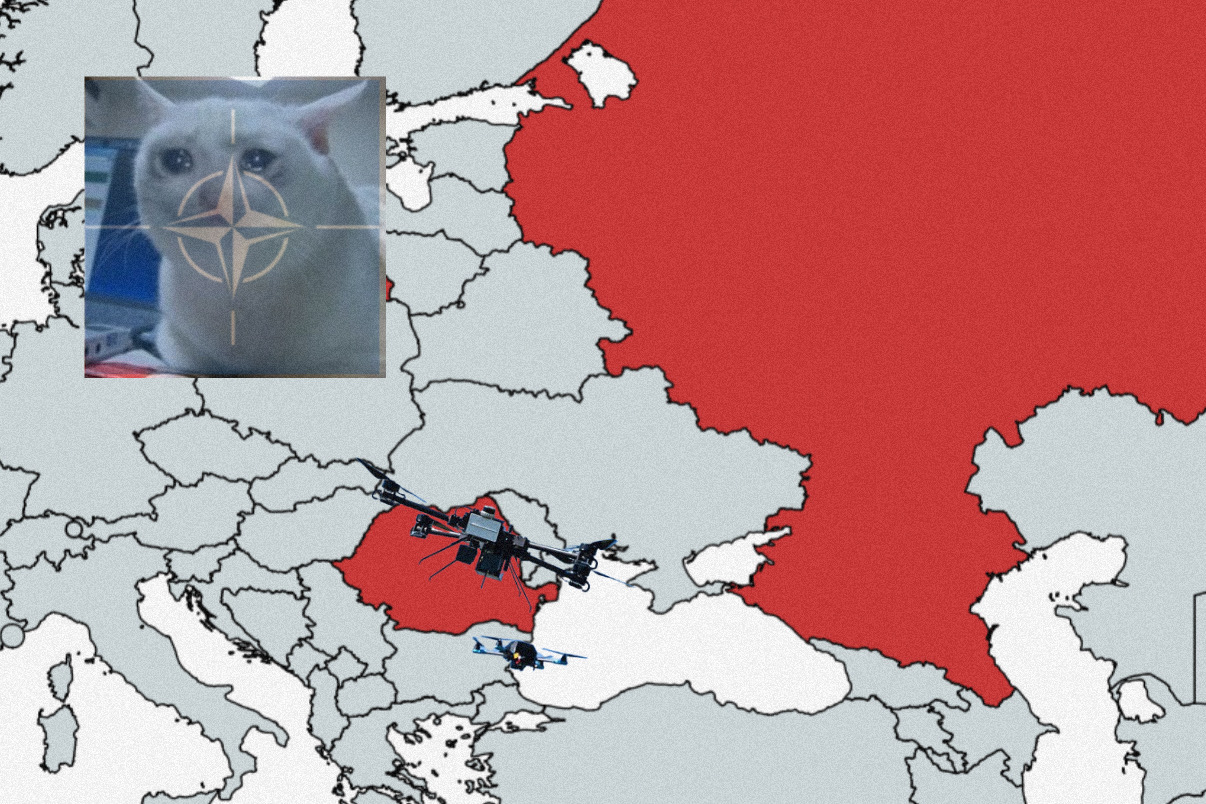
    The war in Ukraine has always been a potential threat to neighboring European countries, but what happened on May 29, 2026, is a much more dangerous event than just accidental conflict. A Russian-made Geran-2 (Shahed-136 variant) loitering munition that crossed the Danube River border and hit a 10-story residential apartment block in the Romanian eastern city of Galați shattered the myth that NATO’s borders are safe from Russian aggression (Romaniv, 2026).

    Romania has experienced dozens of previous cases of unmanned aerial vehicle debris striking non-populated agricultural areas since 2022, but this is the first time the full explosive payload of an unmanned vehicle has detonated in a populated NATO urban area, causing civilian casualties and mass evacuations (SWJ Staff, 2026). This article looks at the technical and tactical aspects that allowed this breach, as well as at the critical analysis of the way Moscow exploits systemic grey-zone vulnerabilities and at the structural weaknesses of traditional allied air defense systems in the face of it.

    Chronology and Technical Dynamics of the Incursion

    The attack on Galați was a special case of a systematic and aggressive attack by hundreds of Russian drones during the night. The attacks mainly targeted the critical infrastructure of the Ukrainian ports on the Danube, namely the grain terminals in Izmail and Reni, which are located on the very limit of NATO’s territory (Romania Insider, 2026). The data from the air tracking and the subsequent military briefings show a very short span of time for the operation, during which the local air defense networks were structurally paralyzed.

    1:19 AM: Russian drone swarms spotted on border radars. The Romanian Air Force launches two F-16 fighter aircraft from 86th Air Base, Fetești, and an IAR 330 SOCAT military helicopter, with clear permission to intercept any hostile air targets (Romania Insider, 2026).

    1:56 AM: one Geran-2 disengages from the rest of the swarm and enters sovereign Romanian airspace over the Danube at an aerodynamic profile meant to evade the long-range radar tracking loops.

    2:00 AM: The drone crashed into the roof of a 10-story residential building in Galați. The whole explosive warhead detonates, causing a severe fire, destruction of the roof structure, and injuring two civilians, forcing an emergency evacuation of over 70 residents (Krupa, 2026).

    The decisive factor in this engagement was a narrow four-minute low-level reaction window (SWJ Staff, 2026). Traveling at approximately 200 km/h (124 mph) at low altitude, the drone traversed Romanian airspace for a mere 240 seconds before kinetic impact (Romania Insider, 2026). From a tactical standpoint, this compressed timeframe leaves ground-based air defense commanders and scrambled fighter pilots operating under peacetime Rules of Engagement (ROE) with zero margin to safely neutralize a low-flying asset over a densely built-up area (Kostina, 2026).

    The Conundrum of Urban Interception: Explaining the Russian Advantage

    The Galați incident reveals a major operational paradox in the way that the frontline NATO countries protect the airspace above their own territories, one that is exploited by Russian planners. Romania has its own legislation, which permits the military to shoot down drones if they are not authorized, but the calculation of a risk in the urban zone is quite unacceptable (Romania Insider, 2026).

    The Romanian military officials pointed to the presence of specialized point-defense assets, which were unable to move forward in the region due to the extremely significant risk of collateral damage and the tight time frame (Kostina, 2026). When an explosive, three-meter-wide drone is directly over a dense city like Galați, that’s a lot of kinetic energy. The high-velocity cascade of shrapnel, burning fuel, and unexploded ordnance can easily lead to more widespread civilian casualties than a blind ground impact (SWJ Staff, 2026). This leaves front-line commanders in an operational conundrum: not shooting down the drone allows for an infringement on sovereignty, but shooting it down ensures a debris field over their own population. The current chaos of the operational grid is no coincidence and an advantage that Russia has taken into account in its flight targeting.

    Critique of Russian Strategy: Weaponizing the Grey Zone

    The Kremlin’s official response to the Galați strike was of the tried and tested variety of plausible deniability and obfuscation. In an effort to shift blame, Russian President Vladimir Putin claimed the missile may have been a stray Ukrainian asset, despite independent NATO and SHAPE radar tracking showing that it had originated from Russia (Krupa, 2026).

    This behavior highlights a calculated strategic posture:

    Moscow’s recklessness is deliberate, as it sends out thousands of drones only a few hundred meters from NATO borders (Krupa, 2026). Although Romanian President Nicușor Dan pointed out that the asset was hit by the Ukrainian air defense system in the Reni area and changed course, the entire responsibility for the situation lies with the launching country (Kutielieva & Oliynyk, 2026). The Kremlin is aware of the fact that in the event of any kind of localized Electronic Warfare (EW) friction and anti-air engagements, munitions will be liable to drift. This goes on the assumption that such strikes across the border are a completely foreseeable result of the Russian targeting policy.

    The high threshold for NATO’s Article 5, which mandates actual animus hostilis (hostile intent), is another legal tactic that Russia has used to its advantage. Operational spillover is used as the excuse for these deadly incursions, which Moscow successfully frames as “accidents” or “technical malfunctions” while simultaneously evading a concerted military response from Europe (SWJ Staff, 2026).

    Geopolitical Fallout and Strategic Re-alignment

    The political reaction from Bucharest marks a clear end of the “strategic patience” approach that was taken in the past with respect to border violations. President Nicușor Dan of Romania does not consider the strike an inevitable consequence of a different conflict taking place nearby, but rather that it is an attack on the country that will not be tolerated (Krupa, 2026).

    Romania’s decision to formally close the Russian consulate in the strategic Black Sea port city of Constanța and declare the Russian Consul General persona non grata was an unprecedented move from Romania, which had never made such a step before (The New Voice of Ukraine, 2026). At the same time, the Romanian Foreign Ministry demanded that NATO allies rapidly accelerate the physical transfer of specialized ground-based Short-Range Air Defense (SHORAD) units and advanced low-altitude tracking sensors to the region. While Foreign Minister Oana Țoiu noted that the gravity of the strike fundamentally justifies invoking Article 4 for formal security consultations, Bucharest is currently prioritizing immediate operational coordination with Allied command over a protracted diplomatic activation (Kostina, 2026; Romania Insider, 2026).

    Conclusion

    The structural reality that the Galați strike highlighted is that the traditional paradigms of air policing, based on high-altitude radar networks and supersonic fighter jets, are utterly outdated in the face of low-flying loitering munitions with low radar cross sections operating in compressed timeframes. The event shows a major weakness that Russia will keep exploiting as long as the alliance sees these violations of borders as something that should be contained. NATO needs to start moving away from a passive monitoring approach and towards highly localized, automated, ground-based point-defense nets positioned right on the Danube defense line to protect its eastern flank against future Russian incursions.

    References

    Kostina, I. (2026, May 29). Slovak PM links Russian drone strike in Romania to lack of dialogue between EU and Moscow. European Pravda. https://www.eurointegration.com.ua/eng/news/2026/05/29/7238593/

    Krupa, J. (2026, May 29). Nato ready to defend ‘every inch’ of territory as Russian drone hits Romania. The Guardian. https://www.theguardian.com/world/2026/may/29/russian-drone-romanian-apartments-wounding-two-people-and-starting-fire

    Kutielieva, I., & Oliynyk, T. (2026, May 29). Romanian president: Drone that struck apartment building was hit by Ukrainian air defence. Ukrainska Pravda. https://www.pravda.com.ua/eng/news/2026/05/29/8036988/

    Romania Insider. (2026, May 29). Ukraine war: Russian drone crashes into apartment building in Romania’s Galați. https://www.romania-insider.com/russian-drone-crashes-apartment-building-romania-2026

    Romaniv, A. (2026, May 29). Russian drone crashes into apartment building in Romania, injuring residents. The Ukrainian Review. https://theukrainianreview.info/russian-drone-crashes-into-apartment-building-in-romania-injuring-residents/

    SWJ Staff. (2026, May 29). A Russian drone hit a Romanian apartment building. Now what? Small Wars Journal. https://smallwarsjournal.com/2026/05/29/a-russian-drone-hit-a-romanian-apartment-building-now-what/

    The New Voice of Ukraine. (2026, May 29). Romania to close Russian consulate after drone hits apartment building in Galați. https://english.nv.ua/nation/romania-to-close-russian-consulate-after-drone-hits-apartment-building-in-galati-50612036.html