
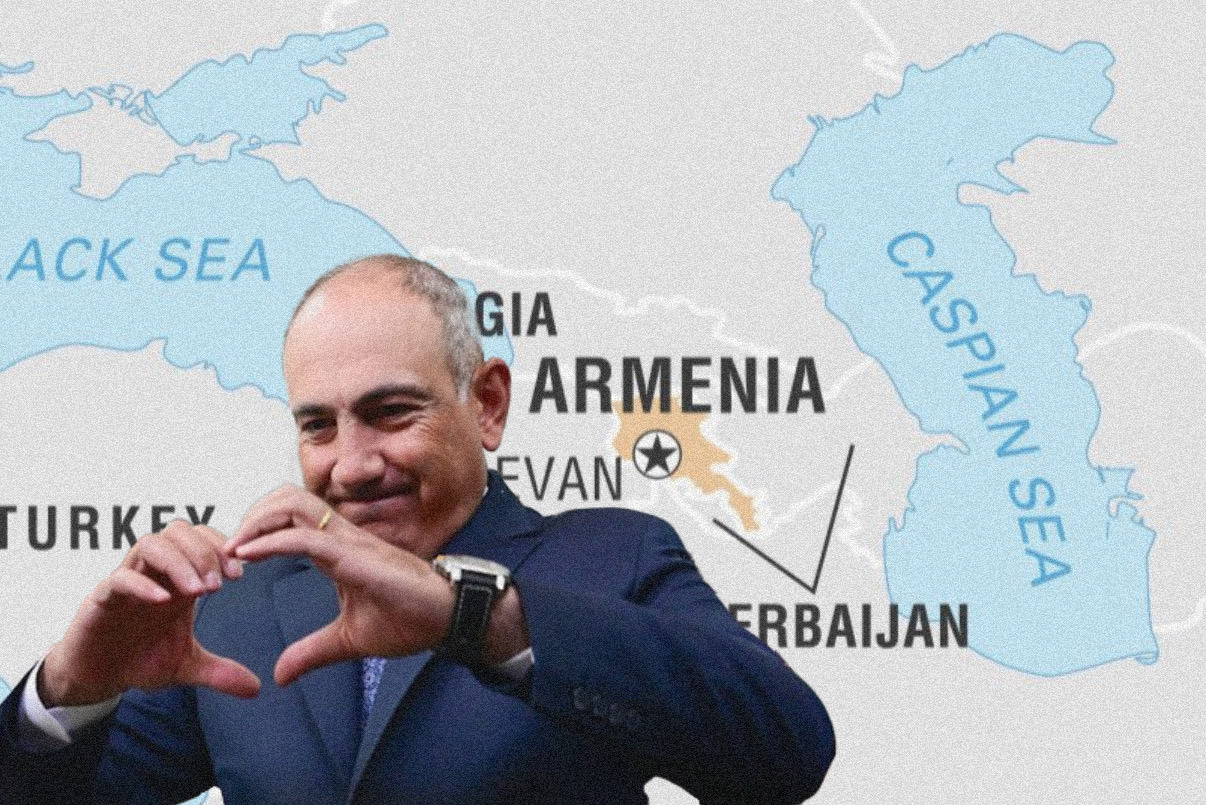
On June 7, 2026, Armenians cast one of the most important votes in the post-Soviet South Caucasus. The pro-Russian Strong Armenia alliance, which was supported by Russian-Armenian billionaire Samvel Karapetyan, finished as a distant second at 23.29%, while Prime Minister Nikol Pashinyan’s Civil Contract party won 49.81% of the vote, a commanding result in a fractured field (Al Jazeera, 2026). With voter turnout exceeding 58%, the voting was not just a democratic process but a referendum on Armenia’s geopolitical soul, with a result that will trigger a series of regional dynamics that will echo beyond the boundaries of Yerevan and beyond.
More Than a Domestic Vote
It is important to realize what the context had become before a single vote was cast in order to grasp the meaning of the result. Armenia’s ties with Russia have been in freefall since the start of Azerbaijan’s military operation in Nagorno-Karabakh in September 2023, which forced more than 100,000 ethnic Armenians to flee in just a few days (European Parliament Think Tank, 2026). Russia’s official NATO-like alliance, the Collective Security Treaty Organisation (CSTO), was also present but took a back seat when Armenia was placed under pressure. In response to this, Pashinyan’s government halted Armenia’s involvement in the CSTO and turned its foreign policy squarely to the west, with an increased focus on the European Union and the United States.
The election of June 7 was not just a contest between a government party and an opposition party. It was a choice between a continuation of that pivot or a change of course back to Moscow’s sphere of influence for Armenia. Each seat, each percentage point mattered.
Russian Interference
The level and scope of external interference were what made the 2026 elections truly historic. The Russian military intelligence-linked threat actor Storm-1516 attacked Armenia more than any other country in the world between April 2025 and April 2026, according to the Atlantic Council (2026). The coordinated disinformation campaign, Operation Matryoshka, shared fabricated news reports, AI-generated videos, and smear content on social media platforms, alleging that Pashinyan was corrupt, sick, and betraying Karabakh Armenians (The Record, 2026).
Russia also used material pressure in addition to the information war. Moscow limited Armenian agricultural exports, threatened to leverage energy resources, and, according to leaked documents reported by the Atlantic Council (2026), supported pro-Russian opposition parties. President Putin himself resorted to a veiled threat, comparing Armenia’s westward path to Ukraine’s prior movement towards the West, which was a warning barely disguised by the wording, and to which Armenian media watchdogs responded with sharp condemnations (France 24, 2026).
None of it worked. The wide range of interference is perhaps a case of the cure being worse than the disease: Armenian voters were extremely conscious of foreign manipulation, and the outcome, a near majority for the incumbent at 49.81%, indicates that the Russian pressure unified, rather than split, the pro-Western side of the electorate. Strong Armenia’s 23.29% is a substantial base of opposition, but not enough to seriously affect Pashinyan’s government.
The Armenia-Azerbaijan Peace Process
This election also has immediate implications for the peace process in the South Caucasus. In August 2025, under U.S. mediation, Presidents Pashinyan and Aliyev signed a Joint Declaration in Washington, initialing a draft peace agreement and agreeing to formal ratification within a year (Regional Centre for Strategic and Global Studies, 2026). This deadline now looms over Pashinyan’s new term.
The peace treaty has always been Pashinyan’s top priority for Armenia, as he has repeatedly described it as the country’s most pressing national need, claiming that sustainable sovereignty is only possible by ending the conflict and opening regional trade routes. The loss of Strong Armenia, which had been using AI-generated videos of Azerbaijanis entering Yerevan and had been exploiting Karabakh grievances, has eliminated the strongest domestic political hurdle to ratification (France 24, 2026). A strengthened parliamentary majority gives Pashinyan the power to bring a peace deal and any related constitutional changes to the National Assembly.
However, the road is not clear. Public polling conducted by the Regional Centre for Strategic and Global Studies (2026) indicates that 47% of Armenians would be willing to sign a peace agreement with Azerbaijan; however, there are still concerns about sovereignty, the fate of displaced Karabakh Armenians, and the conditions of the Zangezur Corridor, a proposed transport corridor that Russia, Turkey and Iran all want to control for their own strategic benefits. Pashinyan’s authority is real, but not unlimited.
Broader Regional Implications: Russia’s Receding Influence
The impact of the outcome is felt beyond the borders of Armenia. The result is one of the biggest defeats for Russia in the post-Soviet region. The Kremlin had heavily invested in building up a pro-Russian majority in Yerevan, both diplomatically, economically and through covert operations. It has failed to show the effectiveness of a hybrid pressure campaign when voters have specific concerns regarding the security guarantor’s performance (Revishvili, 2026).
The result of Armenia has an indirect but pointed message for Georgia. Tbilisi is dealing with its own difficult balancing act between EU dreams and Russian influence in the wake of an administration that has taken steps in the opposite direction from Yerevan. An Armenia that was holding steady and looking westward made the point that the South Caucasus nations are not going to be punished into submission and that they can pursue their own foreign policies. While there are limits to comparison, given the different domestic political environments in the South Caucasus countries, the point is well made.
Azerbaijani President Aliyev will have a more predictable negotiating partner than a divided or pro-Russian government in the office, and that is why a government led by Pashinyan and enjoying a solid mandate is preferable for Azerbaijan. Baku will closely watch Yerevan’s implementation of its new mandate: Does Pashinyan act fast enough to get the ratification done? How does Armenia deal with the reintegration of Karabakh Armenians? Can domestic opposition be dealt with without sparking crises that can slow the peace process?
Conclusion
Armenia’s June 2026 elections have clarified the country’s direction without resolving its vulnerabilities. Pashinyan now holds a durable mandate to deepen EU integration, pursue CSTO disengagement, and push for peace treaty ratification with Azerbaijan. He does so, however, against a backdrop of persistent Russian pressure, an unresolved humanitarian situation for displaced Karabakh Armenians, and a regional security environment that remains fluid.
What the result confirms most clearly is that the South Caucasus is no longer simply Moscow’s backyard by default. Armenia’s voters have made a democratic choice about which future they prefer.
References
Al Jazeera. (2026, June 8). Pro-Western PM Pashinyan sees off Russian pressure to win Armenia election. https://www.aljazeera.com/news/2026/6/8/pm-pashinyans-party-wins-armenia-election-preliminary-results-show
Atlantic Council. (2026, June 9). Four questions (and expert answers) about Armenia’s elections and what to expect next. https://www.atlanticcouncil.org/dispatches/four-questions-and-expert-answers-about-armenias-elections-and-what-to-expect-next/
European Parliament Think Tank. (2026). Armenia’s choice: High stakes ahead of the 7 June 2026 parliamentary elections (EPRS_BRI(2026)789318). https://europarl.europa.eu/thinktank/en/academic/EPRS_BRI(2026)789318
France 24. (2026, June 8). Russian interference in Armenia: A nation tested by disinformation. https://www.france24.com/en/tv-shows/the-observers/20260608-russian-interference-armenia-nation-tested-disinformation
International Republican Institute. (2026, April 29). Statement of findings and recommendations: IRI pre-election assessment mission to Armenia’s 2026 parliamentary elections. https://www.iri.org/resources/statement-of-findings-and-recommendations-iri-pre-election-assessment-mission-to-armenias-2026-parliamentary-elections/
Regional Centre for Strategic and Global Studies. (2026). Armenia’s 2026 elections: A choice between peace and renewed confrontation. https://www.rcsgs.org/publications/research/armenia-s-2026-elections-a-choice-between-peace-and-renewed-confrontation
Revishvili, G. (2026). Armenia’s elections and the geopolitics of the South Caucasus. Russia Analyzed. https://russiaanalyzed.substack.com/p/armenias-elections-and-the-geopolitics
The Record. (2026, June 8). Armenia’s pro-Europe party wins election despite Russia-linked disinformation. https://therecord.media/armenia-pro-europe-party-wins-election-despite-russia-disinformation