
Keywords: Baku-Tbilisi-Kars (BTK), Middle Corridor, South Caucasus Logistics, Infrastructure Integration, Land Border Policies.
For more than six years, the overland border between Azerbaijan and Georgia sat frozen. After a rapid recovery from the pandemic, the regional aviation industry began to grow again. However, Baku gradually expanded its land border closures under a strict quarantine regime, creating a series of disconnected territorial enclaves in the South Caucasus transit zone.
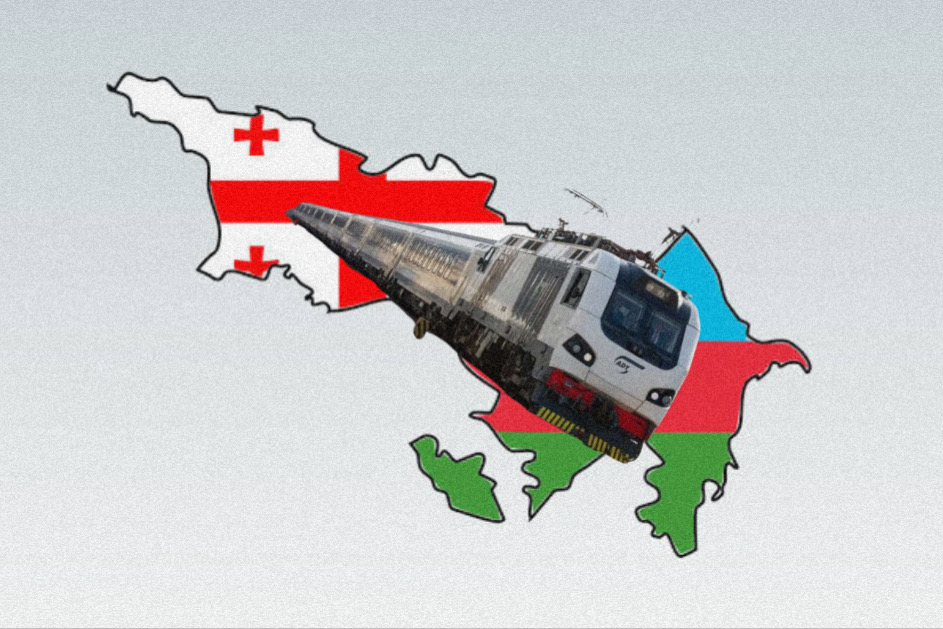
The isolation was broken after the official state visit of the Georgian Prime Minister Irakli Kobakhidze to Baku. The signing of the final protocol to restore daily overnight passenger rail service between the two capitals does more than just revive a long-defunct Soviet-era route. It is the complete activation of the newly upgraded Baku-Tbilisi-Kars (BTK) infrastructure network. The horizontal axis makes the South Caucasus from a buffer space into a strategic, efficient land corridor linking Europe with Central Asia and China as global supply chains are being fractured.
Quantitative Realignment: Upgrading the Trans-Caucasus Axis
Strategically, the importance of the BTK corridor is connected with its new capacity. The project of modernization focused a great deal on the modernization of the difficult areas of the highlands in southern Georgia, which significantly increased the cargo velocity and weight capacity (Middle Corridor, 2026).
| Metric | Pre-2026 Baseline | Current 2026 Capacity | Long-Term Target (2034) |
| Annual Freight Throughput | 1.0 million tons | 5.0 million tons | 17.0 million tons |
| Annual Passenger Capacity | 100,000 | 1,000,000 | 3,000,000 |
| Max Transit Speed (Georgia) | 30-40 km/h | 50–90 km/h | 120 km/h |
The corridor now has an automated wheelset replacement station (Lush, 2026), making the old Soviet 1520mm rail gauge and the standard 1435mm European track gauge completely seamless from the Caspian Sea all the way to Europe.
You Might Aslo Read
Analytical Drivers Reshaping the South Caucasus
- Consolidation of the Middle Corridor Architecture
The enhanced BTK line is now ready for use, as the world is entering a period of extreme vulnerability in the logistics sector. The Middle Corridor (Trans-Caspian International Transport Route) is now essential as maritime shipping through the Red Sea has been constantly disrupted by security risks, and the traditional Northern Corridor through Russia has been put out of reach because of Western sanctions. The dryland main line is the BTK railway. The route’s extension reduced the transit time between China and European markets to as little as 15 days, a considerable improvement over the 25-45 days it takes to travel by sea via the traditional route. The new line cut transit time between China and European markets to as little as 15 days, which gives the South Caucasian nations a genuine advantage in their trade with Europe (Ioseliani, 2026). - The First Breach in Azerbaijan’s Border Isolation Policy
The Baku-Tbilisi passenger train’s special diplomatic exemption is a significant change in Azerbaijan’s domestic policy. Baku has maintained its land borders closed since March 2020, leaving all those who want to travel inbound to pay high prices for state-sponsored flights. Reopening the rails with modern Swiss-built Stadler sleeper coaches is a controlled experiment in alleviating this isolation (Savenkova & Stolchnev, 2026). It instantly restores affordable regional travel and restores the mobility of families, students, and traders who were too high-priced to fly (Lush, 2026). - Wipe out Soviet Infrastructure Paths
In the past, rail lines in the South Caucasus were built by the Russian authorities to go straight up and down, thus rewarding all the regional trade with a benefit to the imperial center. The alternatives for the BTK line are purely horizontal, running east to west (Broers, 2020), which avoids Russian territory altogether. For Georgia, it represents the first direct railway connection to Türkiye and, in conjunction with the ties between Baku and Ankara, will create a trilateral economic axis, making the country’s transit network structurally independent of its northern neighbor.
The Geopolitical Squeeze on Armenia
The existing configuration of the BTK line renders Armenia totally isolated, depriving Yerevan of the most lucrative transit fees. This exclusion is, however, causing a counter-reaction. To avoid complete isolation, Yerevan has worked hard on pitching its own ‘Crossroads of Peace’ project, which seeks to open regional borders. The stakes are huge: Technical assessment teams have already started working on the historic Gyumri-Kars rail link on the Armenian-Turkish border. The opening of that border, combined with the restoration of the rail line, will pose a threat to the exclusive transit monopoly currently enjoyed by the Baku–Tbilisi line.
Conclusions: Integration over Domestic Politics
This is another testament to the rule in South Caucasus geopolitics: infrastructure integration outweighs political polarization in the revival of the Baku-Tbilisi route. Despite the domestic political division and the worsening relations with the West in Georgia, its economic and logistical ties with Azerbaijan and Türkiye are still not affected at all (Lebanidze & Kakachia, 2023; The Nation, 2026). The South Caucasian region is no longer a mere buffer zone between rival empires. The BTK line is up and running, and the region has become an active and important corridor for global trade, which puts local states in a stronger position on the global stage.
References
Broers, L. (2020). Armenia and Azerbaijan: Anatomy of a rivalry. Edinburgh University Press.
Caspian Post. (2026, May 18). Baku-Tbilisi passenger rail resumes after 6 years. https://caspianpost.com/georgia/baku-tbilisi-passenger-rail-resumes-after-6-years
Ioseliani, T. (2026, May 20). Full launch of Baku-Tbilisi-Kars railway opens new chapter in regional connectivity. Business Insider Georgia. https://www.businessinsider.ge/Economic/georgian-deputy-economy-minister-says-full-launch-of-baku-tbilisi-kars-railway-opens-new-chapter-in-regional-connectivity-36394?lng=eng
Lebanidze, B., & Kakachia, K. (2023). Informal governance and democratic backsliding in the EU’s neighborhood: The case of Georgia. European Foreign Affairs Review, 28(1), 45–66.
Lush, E. (2026, May 29). NEW Tbilisi to Baku train: 2026 complete guide (Times, tickets & borders). Wander-Lush. https://wander-lush.org/tbilisi-to-baku-train/
Middle Corridor. (2026, March 11). Modernization work of the Baku-Tbilisi-Kars (BTK) railway line has been completed. Trans-Caspian International Transport Route Association. https://middlecorridor.com/en/for-clients/info-clients/modernization-work-of-the-baku-tbilisi-kars-btk-railway-line-has-been-completed
Savenkova, E., & Stolchnev, A. (2026, May 29). Stadler coaches begin operating between Azerbaijan and Georgia. RollingStock World. https://rollingstockworld.com
The Nation. (2026, May 20). Azerbaijan and Georgia agree on resumption of passenger train services on Baku–Tbilisi–Baku route. https://www.nation.com.pk/20-May-2026/azerbaijan-georgia-agree-resumption-passenger-train-services-baku-tbilisi-baku-route