Category: Caucasus

  • The EU’s Eastern Flank in June 2026

    The EU’s Eastern Flank in June 2026

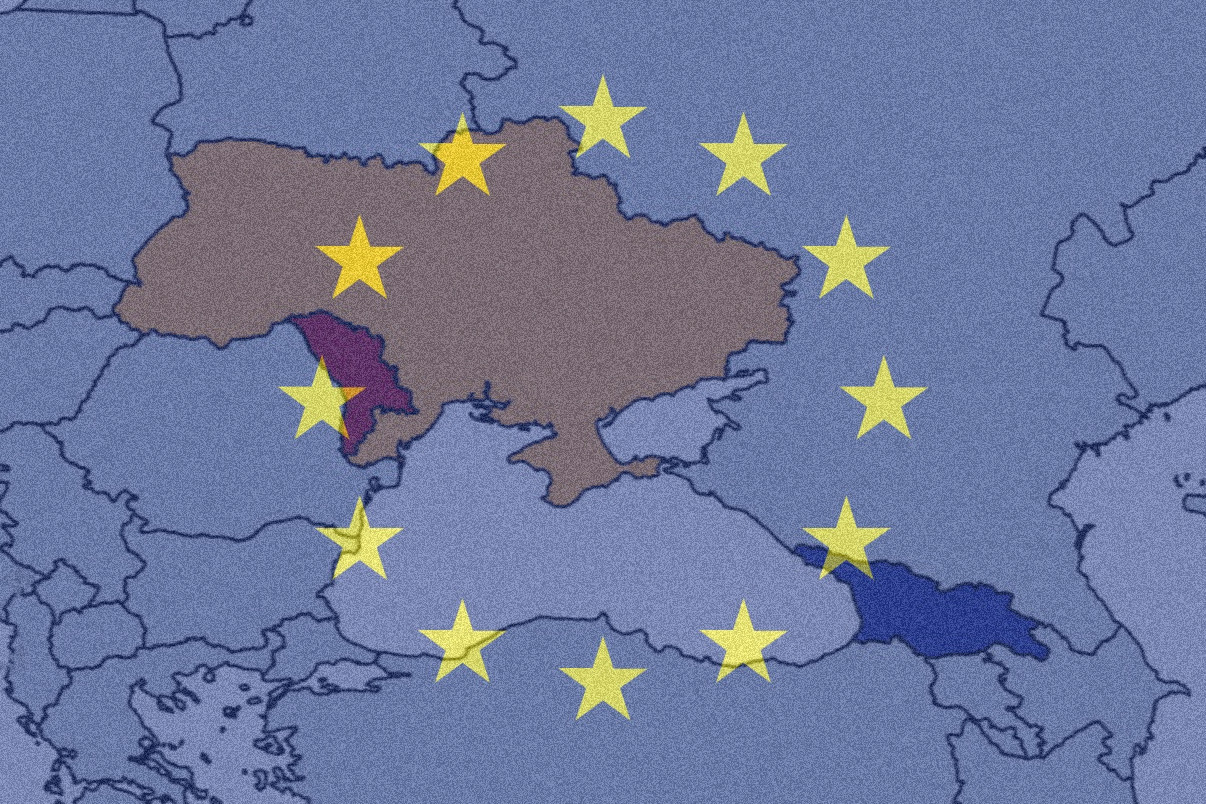
    June 2026 has solidified a sharp divide between the European Union and its Eastern flank. In just one week, Ukraine and Moldova have reached a milestone that had been blocked for almost two years, while Georgia, hailed as an “inspiring leader” among Eastern Partnership nations, continued to languish in a state of self-imposed isolation. The differences of these three candidate countries provide a valuable lesson on the mechanics of EU enlargement and on the impact of geopolitical alignment, domestic politics, and democratic commitment on a country’s European future.

    A Historic Breakthrough – For Two?

    On 15 June 2026, under the Cypriot Council presidency, the European Union formally launched the first cluster of accession negotiations, the cluster on “Fundamentals” with Ukraine and Moldova (Council of the EU, 2026). The most important cluster in the accession process is the cluster of the rule of law, fundamental rights, functioning of democratic institutions, public administration reform, and economic criteria. It is the first open and the last closed, and thus its progress sets the pace for all others (European Commission, 2026a).

    It was a long time coming. The formal launch of the cluster talks had been blocked in Hungary since 2024 due to concerns about the rights of the Hungarian minority in Ukraine’s Transcarpathia region. The deadlock only ended when Viktor Orbán’s government collapsed in the 2026 Hungarian parliamentary elections in April. Within weeks, new Prime Minister Péter Magyar negotiated a deal with Kyiv, allowing Budapest to remove its veto (Al Jazeera, 2026). The speed was remarkable: Magyar himself noted that his government had achieved in three weeks what the previous administration had failed to accomplish in ten years (New Union Post, 2026a).

    It was a very symbolic and practical moment for Ukraine. The negotiations on accession are conducted in six thematic clusters, while the remaining ones cannot be finalized until the benchmarks of Cluster 1 (Time, 2026) are fulfilled. In September 2025, Ukraine had already gone through the EU bilateral screening process and had adopted a national program to implement the EU acquis. Some chapters may be closed as early as 2026, and the Accession Treaty might be drawn up and signed in 2027 (New Union Post, 2026b). On 1 January 2026, Ukraine also became part of the EU’s roaming area, which represents a concrete advantage for citizens (Council of the EU, n.d.). There may be some resistance to the idea of progress, but it is real.

    Moldova’s trajectory is even more interesting, especially in the context of the small country’s limited resources. Chișinău has quietly built up a good reform record, having gone through its own screening process in September 2025 and having in place 28 out of 30 reforms required under the EU’s Growth Plan, securing €504 million in disbursements to date (New Union Post, 2026c). At the EU-Moldova Summit on 22 June 2026, Commission President von der Leyen made it clear: “When a candidate country performs the way Moldova does…, it deserves to move on. A merit-based process is not a slow process, it is a fair process” (Euronews, 2026). Since then, Moldavian President Maia Sandu has urged the remaining five clusters to be opened up right away, calling it a race against time (New Union Post, 2026c).

    A major issue now on the table for both countries is whether Moldova should be separated from Ukraine’s path to accession. The two bids have been tied since 2022, and it was a political decision, based on the logic of the Eastern Partnership. The formal process, which is currently underway, calls for different reforms at different speeds, however. EU officials have started to recognize that there is a possibility for decoupling (Euronews, 2026). For Moldova, a country at peace, with a long-term goal of joining a pro-European country and a consistently pro-European government, this adds unnecessary delay to its path to joining a country still engaged in conflict.

    Georgia’s Frozen Path

    Georgia shows the opposite scenario. The country was granted EU candidate status in December 2023, together with Ukraine and Moldova, and has experienced a “serious democratic backsliding, with a fast deterioration of the rule of law and fundamental rights” (European Commission, 2025). The ruling Georgian Dream party, which is supported by oligarch Bidzina Ivanishvili, enacted a foreign agents law similar to the one adopted by Russia and implemented other broad anti-LGBTQ+ measures while also orchestrating a parliamentary election in October 2024 that international observers described as neither free nor fair (RFE/RL, 2025).

    The results were immediate. In November 2024, Prime Minister Irakli Kobakhidze announced that Georgia would suspend its EU accession process until 2028, sparking the largest wave of street protests since Georgian independence (Wikipedia, 2026a). The European Parliament passed a resolution that condemned the election results and requested new elections (European Parliament, 2025). In March 2026, the European Commission (EEAS) applied the new visa suspension mechanism for the first time, cancelling visa-free travel for holders of Georgian diplomatic, service, and official passports. It is in effect until March 2027 and can be expanded and spread to the Georgian people if the situation gets worse. EU Commissioner Magnus Brunner said simply, “There is no room for anyone who is a representative of repression in our Union” (Washington Times, 2026).

    Further, in the Commission’s 2025 report, Georgian candidate status was called “only on paper” (EU Neighbours East, 2025). This is not just a matter of rhetoric: Georgia has not done anything of the nine reform steps that are needed for the start of accession negotiations. Opposition leaders have been arrested, independent media have been attacked, and civil society groups have had their bank accounts blocked for alleged protest activities (Human Rights Watch, 2026). According to a survey conducted early in 2026, a majority of Georgians (71%) still wish to be a member of the EU, but their own government is holding them captive (Wikipedia, 2026b).

    What This Divergence Reveals

    What Georgia, Ukraine, and Moldova have in common is a stark lesson about the process of enlargement: it is based on the act of commitment, not the word. Georgia’s government professes to support EU membership in principle but systematically undermines the democratic structures and processes required to join the EU. Ukraine is in a full-scale war and is taking measures to implement judicial reforms and conform to the EU acquis in conditions none of the previous candidates have faced. In the face of intense Russian geopolitical pressure, Moldova has met its reform targets regularly.

    The Eastern Flank divergence also has a wider message for the EU’s instruments of influence. If applied rigorously, the merit-based enlargement process gives genuine incentives for reform. But it can also be used: the government can be frozen in place, it can take the sanctions into its stride, and it can claim victimhood status and still have the nominal status of having the status of a candidate. The issue for Brussels is whether a ‘candidate country in name only’ should always stay in that category or whether there is a need for clearer-cut criteria for suspension.

    What the future of the Eastern Partnership in Europe looks like was demonstrated in June 2026. The way to Brussels is now officially open for two of its members. For the third, it hasn’t started yet.

    References

    Al Jazeera. (2026, June 12). EU agrees launch of accession process for Ukraine and Moldova. https://www.aljazeera.com/news/2026/6/12/eu-agrees-launch-of-accession-process-for-ukraine-and-moldova

    Council of the EU. (2026, June 15). EU and Ukraine open first accession negotiations cluster. https://www.consilium.europa.eu/en/press/press-releases/2026/06/15/eu-and-ukraine-open-first-accession-negotiations-cluster/

    Council of the EU. (n.d.). Ukraine. https://www.consilium.europa.eu/en/policies/ukraine/

    EEAS. (2026, March 6). Commission suspends visa-free travel for Georgian holders of diplomatic, service or official passports under the revised Visa Suspension Mechanism. https://www.eeas.europa.eu/delegations/georgia/commission-suspends-visa-free-travel-georgian-holders-diplomatic-service-or-official-passports-under_en

    EU Neighbours East. (2025, November 7). European Commission says Georgia “a candidate country in name only”. https://euneighbourseast.eu/news/latest-news/european-commission-says-georgia-a-candidate-country-in-name-only/

    Euronews. (2026, June 22). EU sets stage for decoupling Moldova’s accession bid from Ukraine’s. https://www.euronews.com/my-europe/2026/06/22/eu-sets-stage-for-decoupling-moldovas-accession-bid-from-ukraines

    European Commission. (2025). Georgia 2025 enlargement report. https://enlargement.ec.europa.eu/countries/georgia_en

    European Commission. (2026a). EU and Ukraine open first accession negotiations cluster. https://enlargement.ec.europa.eu/news/eu-and-ukraine-open-first-accession-negotiations-cluster-2026-06-15_en

    European Parliament. (2025, September 7). Parliament deplores the democratic backsliding and repression in Georgia. https://www.europarl.europa.eu/news/en/press-room/20250704IPR29451/parliament-deplores-the-democratic-backsliding-and-repression-in-georgia

    Human Rights Watch. (2026). World report 2026: Georgia. https://www.hrw.org/world-report/2026/country-chapters/georgia

    New Union Post. (2026a, June 4). EU accession talks with Ukraine and Moldova are almost ready. https://newunionpost.eu/2026/06/04/work-eu-accession-talks-ukraine-moldova/

    New Union Post. (2026b, April 22). Ukraine aims to close EU accession chapters already in 2026. https://newunionpost.eu/2026/04/22/ukraine-eu-accession-chapters-2026/

    New Union Post. (2026c, June 22). EU–Moldova Summit overshadowed by uncertainty over accession. https://newunionpost.eu/2026/06/22/eu-moldova-summit-accession-clusters/

    RFE/RL. (2025, November 3). EU report slams Georgia for democratic backsliding, highlights progress in other candidates. https://www.rferl.org/a/eu-report-slams-georgia-democratic-backsliding-progress-candidates/33580249.html

    Time. (2026, June 15). Ukraine is a step closer to joining the European Union. Here’s what to know. https://time.com/article/2026/06/15/ukraine-joining-the-european-union-membership-process-negotiations-status/

    Washington Times. (2026, March 6). EU suspends visa-free travel for Georgian diplomats and officials over democratic backsliding. https://www.washingtontimes.com/news/2026/mar/6/eu-suspends-visa-free-travel-georgian-diplomats-officials-democratic/

  • Armenia’s 2026 Parliamentary Elections: A Mandate Against Moscow and What Comes Next for the South Caucasus

    Armenia’s 2026 Parliamentary Elections: A Mandate Against Moscow and What Comes Next for the South Caucasus

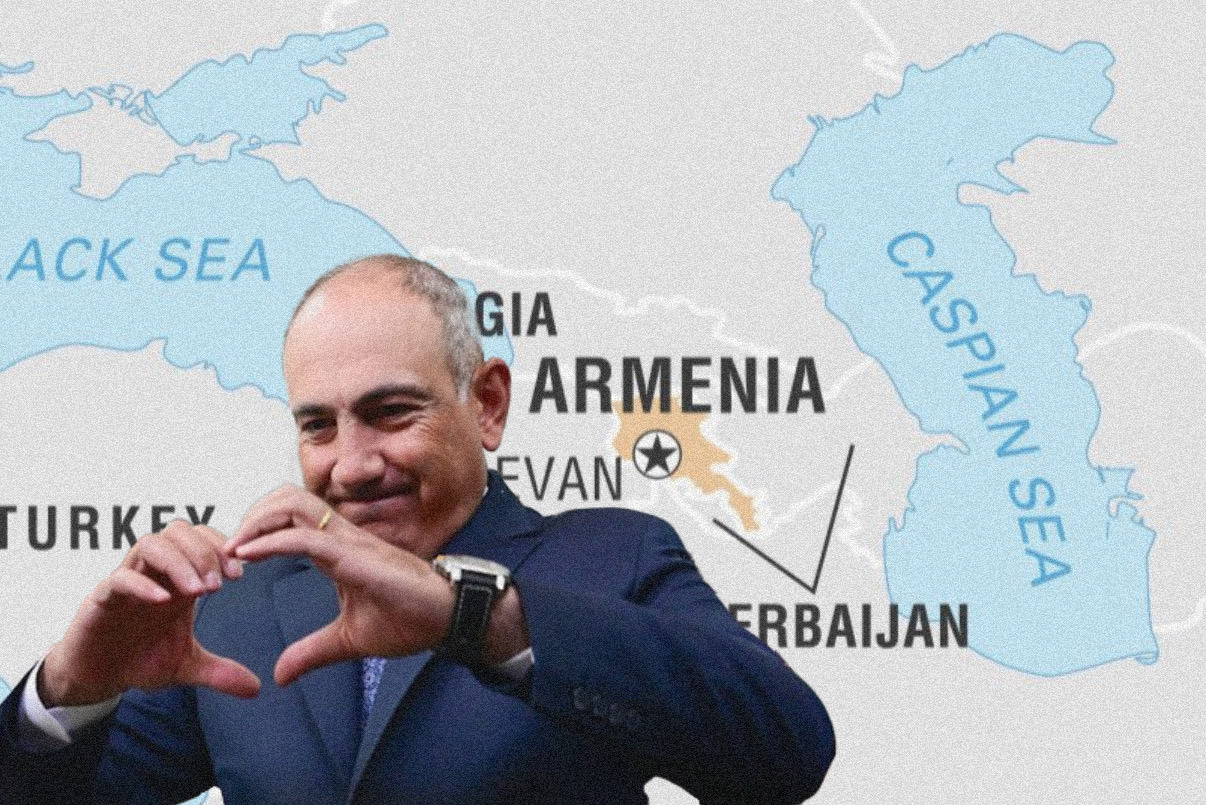
    On June 7, 2026, Armenians cast one of the most important votes in the post-Soviet South Caucasus. The pro-Russian Strong Armenia alliance, which was supported by Russian-Armenian billionaire Samvel Karapetyan, finished as a distant second at 23.29%, while Prime Minister Nikol Pashinyan’s Civil Contract party won 49.81% of the vote, a commanding result in a fractured field (Al Jazeera, 2026). With voter turnout exceeding 58%, the voting was not just a democratic process but a referendum on Armenia’s geopolitical soul, with a result that will trigger a series of regional dynamics that will echo beyond the boundaries of Yerevan and beyond.

    More Than a Domestic Vote

    It is important to realize what the context had become before a single vote was cast in order to grasp the meaning of the result. Armenia’s ties with Russia have been in freefall since the start of Azerbaijan’s military operation in Nagorno-Karabakh in September 2023, which forced more than 100,000 ethnic Armenians to flee in just a few days (European Parliament Think Tank, 2026). Russia’s official NATO-like alliance, the Collective Security Treaty Organisation (CSTO), was also present but took a back seat when Armenia was placed under pressure. In response to this, Pashinyan’s government halted Armenia’s involvement in the CSTO and turned its foreign policy squarely to the west, with an increased focus on the European Union and the United States.

    The election of June 7 was not just a contest between a government party and an opposition party. It was a choice between a continuation of that pivot or a change of course back to Moscow’s sphere of influence for Armenia. Each seat, each percentage point mattered.

    Russian Interference

    The level and scope of external interference were what made the 2026 elections truly historic. The Russian military intelligence-linked threat actor Storm-1516 attacked Armenia more than any other country in the world between April 2025 and April 2026, according to the Atlantic Council (2026). The coordinated disinformation campaign, Operation Matryoshka, shared fabricated news reports, AI-generated videos, and smear content on social media platforms, alleging that Pashinyan was corrupt, sick, and betraying Karabakh Armenians (The Record, 2026).

    Russia also used material pressure in addition to the information war. Moscow limited Armenian agricultural exports, threatened to leverage energy resources, and, according to leaked documents reported by the Atlantic Council (2026), supported pro-Russian opposition parties. President Putin himself resorted to a veiled threat, comparing Armenia’s westward path to Ukraine’s prior movement towards the West, which was a warning barely disguised by the wording, and to which Armenian media watchdogs responded with sharp condemnations (France 24, 2026).

    None of it worked. The wide range of interference is perhaps a case of the cure being worse than the disease: Armenian voters were extremely conscious of foreign manipulation, and the outcome, a near majority for the incumbent at 49.81%, indicates that the Russian pressure unified, rather than split, the pro-Western side of the electorate. Strong Armenia’s 23.29% is a substantial base of opposition, but not enough to seriously affect Pashinyan’s government.

    The Armenia-Azerbaijan Peace Process

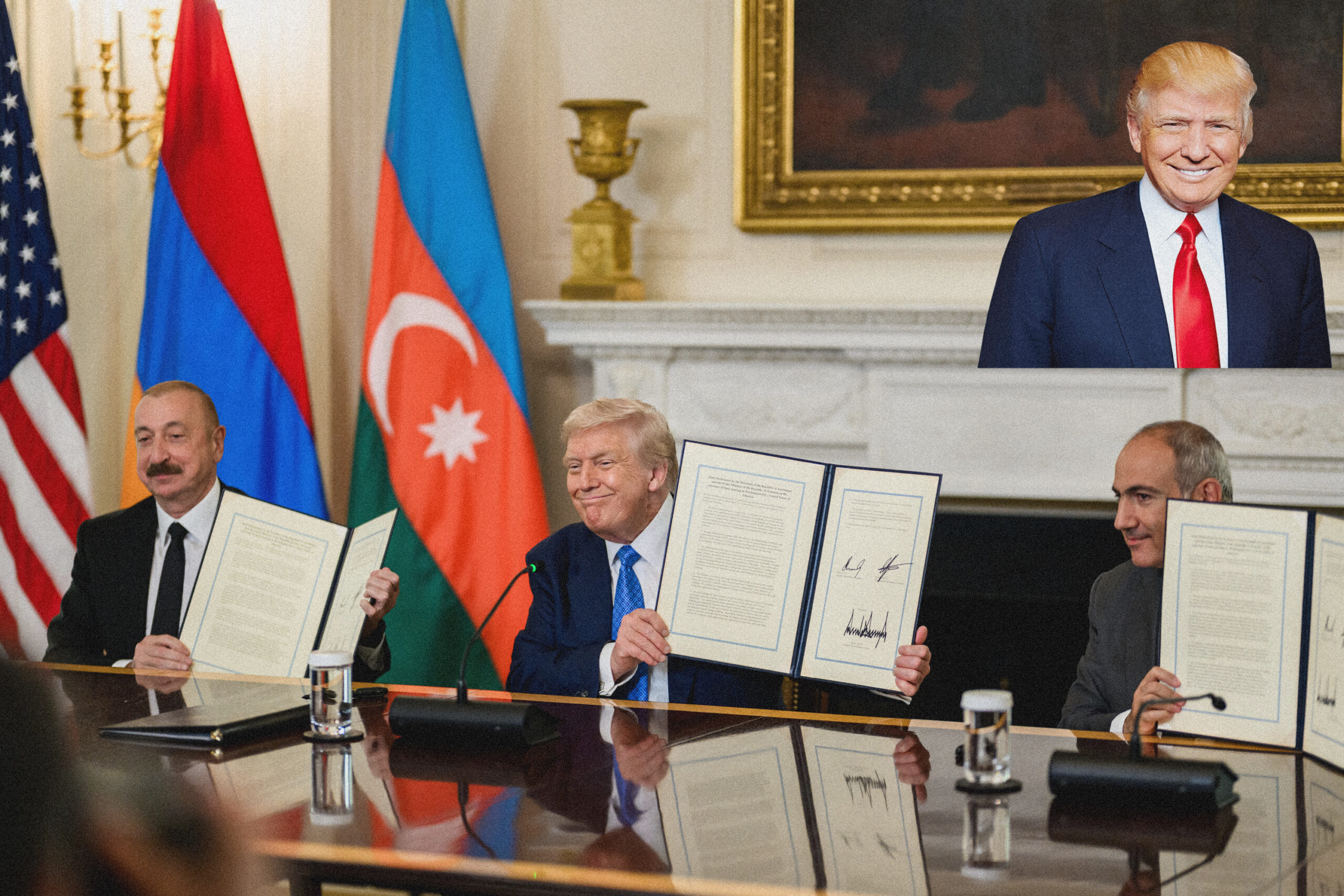
    This election also has immediate implications for the peace process in the South Caucasus. In August 2025, under U.S. mediation, Presidents Pashinyan and Aliyev signed a Joint Declaration in Washington, initialing a draft peace agreement and agreeing to formal ratification within a year (Regional Centre for Strategic and Global Studies, 2026). This deadline now looms over Pashinyan’s new term.

    The peace treaty has always been Pashinyan’s top priority for Armenia, as he has repeatedly described it as the country’s most pressing national need, claiming that sustainable sovereignty is only possible by ending the conflict and opening regional trade routes. The loss of Strong Armenia, which had been using AI-generated videos of Azerbaijanis entering Yerevan and had been exploiting Karabakh grievances, has eliminated the strongest domestic political hurdle to ratification (France 24, 2026). A strengthened parliamentary majority gives Pashinyan the power to bring a peace deal and any related constitutional changes to the National Assembly.

    However, the road is not clear. Public polling conducted by the Regional Centre for Strategic and Global Studies (2026) indicates that 47% of Armenians would be willing to sign a peace agreement with Azerbaijan; however, there are still concerns about sovereignty, the fate of displaced Karabakh Armenians, and the conditions of the Zangezur Corridor, a proposed transport corridor that Russia, Turkey and Iran all want to control for their own strategic benefits. Pashinyan’s authority is real, but not unlimited.

    Broader Regional Implications: Russia’s Receding Influence

    The impact of the outcome is felt beyond the borders of Armenia. The result is one of the biggest defeats for Russia in the post-Soviet region. The Kremlin had heavily invested in building up a pro-Russian majority in Yerevan, both diplomatically, economically and through covert operations. It has failed to show the effectiveness of a hybrid pressure campaign when voters have specific concerns regarding the security guarantor’s performance (Revishvili, 2026).

    The result of Armenia has an indirect but pointed message for Georgia. Tbilisi is dealing with its own difficult balancing act between EU dreams and Russian influence in the wake of an administration that has taken steps in the opposite direction from Yerevan. An Armenia that was holding steady and looking westward made the point that the South Caucasus nations are not going to be punished into submission and that they can pursue their own foreign policies. While there are limits to comparison, given the different domestic political environments in the South Caucasus countries, the point is well made.

    Azerbaijani President Aliyev will have a more predictable negotiating partner than a divided or pro-Russian government in the office, and that is why a government led by Pashinyan and enjoying a solid mandate is preferable for Azerbaijan. Baku will closely watch Yerevan’s implementation of its new mandate: Does Pashinyan act fast enough to get the ratification done? How does Armenia deal with the reintegration of Karabakh Armenians? Can domestic opposition be dealt with without sparking crises that can slow the peace process?

    Conclusion

    Armenia’s June 2026 elections have clarified the country’s direction without resolving its vulnerabilities. Pashinyan now holds a durable mandate to deepen EU integration, pursue CSTO disengagement, and push for peace treaty ratification with Azerbaijan. He does so, however, against a backdrop of persistent Russian pressure, an unresolved humanitarian situation for displaced Karabakh Armenians, and a regional security environment that remains fluid.

    What the result confirms most clearly is that the South Caucasus is no longer simply Moscow’s backyard by default. Armenia’s voters have made a democratic choice about which future they prefer.

    References

    Al Jazeera. (2026, June 8). Pro-Western PM Pashinyan sees off Russian pressure to win Armenia election. https://www.aljazeera.com/news/2026/6/8/pm-pashinyans-party-wins-armenia-election-preliminary-results-show

    Atlantic Council. (2026, June 9). Four questions (and expert answers) about Armenia’s elections and what to expect next. https://www.atlanticcouncil.org/dispatches/four-questions-and-expert-answers-about-armenias-elections-and-what-to-expect-next/

    European Parliament Think Tank. (2026). Armenia’s choice: High stakes ahead of the 7 June 2026 parliamentary elections (EPRS_BRI(2026)789318). https://europarl.europa.eu/thinktank/en/academic/EPRS_BRI(2026)789318

    France 24. (2026, June 8). Russian interference in Armenia: A nation tested by disinformation. https://www.france24.com/en/tv-shows/the-observers/20260608-russian-interference-armenia-nation-tested-disinformation

    International Republican Institute. (2026, April 29). Statement of findings and recommendations: IRI pre-election assessment mission to Armenia’s 2026 parliamentary elections. https://www.iri.org/resources/statement-of-findings-and-recommendations-iri-pre-election-assessment-mission-to-armenias-2026-parliamentary-elections/

    Regional Centre for Strategic and Global Studies. (2026). Armenia’s 2026 elections: A choice between peace and renewed confrontation. https://www.rcsgs.org/publications/research/armenia-s-2026-elections-a-choice-between-peace-and-renewed-confrontation

    Revishvili, G. (2026). Armenia’s elections and the geopolitics of the South Caucasus. Russia Analyzed. https://russiaanalyzed.substack.com/p/armenias-elections-and-the-geopolitics

    The Record. (2026, June 8). Armenia’s pro-Europe party wins election despite Russia-linked disinformation. https://therecord.media/armenia-pro-europe-party-wins-election-despite-russia-disinformation

  • The Geopolitical Economy of the Baku-Tbilisi Passenger Train Revival and BTK Modernization

    The Geopolitical Economy of the Baku-Tbilisi Passenger Train Revival and BTK Modernization

    Keywords: Baku-Tbilisi-Kars (BTK), Middle Corridor, South Caucasus Logistics, Infrastructure Integration, Land Border Policies.


    For more than six years, the overland border between Azerbaijan and Georgia sat frozen. After a rapid recovery from the pandemic, the regional aviation industry began to grow again. However, Baku gradually expanded its land border closures under a strict quarantine regime, creating a series of disconnected territorial enclaves in the South Caucasus transit zone.

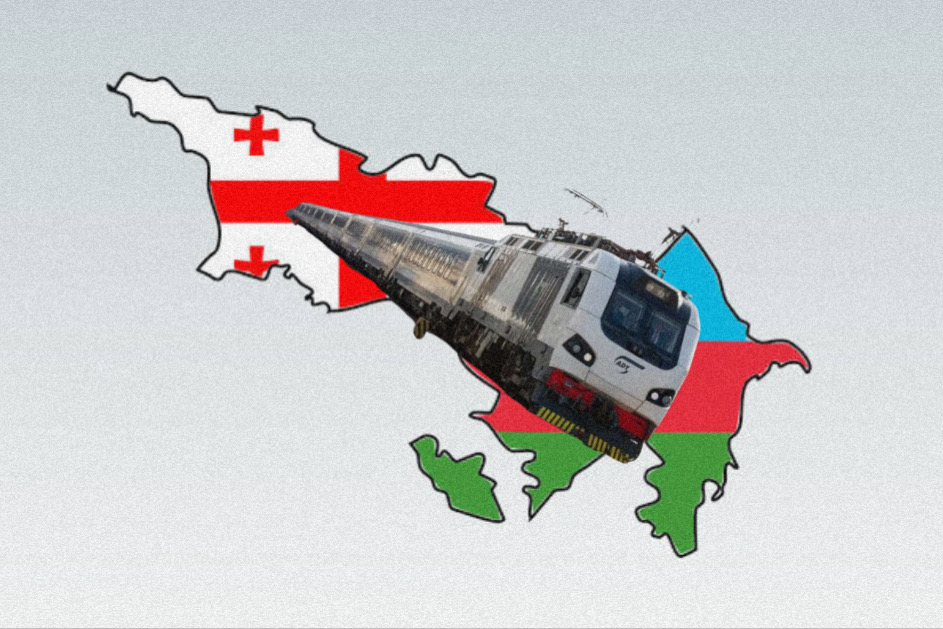
    The isolation was broken after the official state visit of the Georgian Prime Minister Irakli Kobakhidze to Baku. The signing of the final protocol to restore daily overnight passenger rail service between the two capitals does more than just revive a long-defunct Soviet-era route. It is the complete activation of the newly upgraded Baku-Tbilisi-Kars (BTK) infrastructure network. The horizontal axis makes the South Caucasus from a buffer space into a strategic, efficient land corridor linking Europe with Central Asia and China as global supply chains are being fractured.

    Quantitative Realignment: Upgrading the Trans-Caucasus Axis

    Strategically, the importance of the BTK corridor is connected with its new capacity. The project of modernization focused a great deal on the modernization of the difficult areas of the highlands in southern Georgia, which significantly increased the cargo velocity and weight capacity (Middle Corridor, 2026).

    MetricPre-2026 BaselineCurrent 2026 CapacityLong-Term Target (2034)
    Annual Freight Throughput1.0 million tons5.0 million tons17.0 million tons
    Annual Passenger Capacity100,0001,000,0003,000,000
    Max Transit Speed (Georgia)30-40 km/h50–90 km/h120 km/h

    The corridor now has an automated wheelset replacement station (Lush, 2026), making the old Soviet 1520mm rail gauge and the standard 1435mm European track gauge completely seamless from the Caspian Sea all the way to Europe.

    Analytical Drivers Reshaping the South Caucasus

    1. Consolidation of the Middle Corridor Architecture
      The enhanced BTK line is now ready for use, as the world is entering a period of extreme vulnerability in the logistics sector. The Middle Corridor (Trans-Caspian International Transport Route) is now essential as maritime shipping through the Red Sea has been constantly disrupted by security risks, and the traditional Northern Corridor through Russia has been put out of reach because of Western sanctions. The dryland main line is the BTK railway. The route’s extension reduced the transit time between China and European markets to as little as 15 days, a considerable improvement over the 25-45 days it takes to travel by sea via the traditional route. The new line cut transit time between China and European markets to as little as 15 days, which gives the South Caucasian nations a genuine advantage in their trade with Europe (Ioseliani, 2026).
    2. The First Breach in Azerbaijan’s Border Isolation Policy
      The Baku-Tbilisi passenger train’s special diplomatic exemption is a significant change in Azerbaijan’s domestic policy. Baku has maintained its land borders closed since March 2020, leaving all those who want to travel inbound to pay high prices for state-sponsored flights. Reopening the rails with modern Swiss-built Stadler sleeper coaches is a controlled experiment in alleviating this isolation (Savenkova & Stolchnev, 2026). It instantly restores affordable regional travel and restores the mobility of families, students, and traders who were too high-priced to fly (Lush, 2026).
    3. Wipe out Soviet Infrastructure Paths
      In the past, rail lines in the South Caucasus were built by the Russian authorities to go straight up and down, thus rewarding all the regional trade with a benefit to the imperial center. The alternatives for the BTK line are purely horizontal, running east to west (Broers, 2020), which avoids Russian territory altogether. For Georgia, it represents the first direct railway connection to Türkiye and, in conjunction with the ties between Baku and Ankara, will create a trilateral economic axis, making the country’s transit network structurally independent of its northern neighbor.

    The Geopolitical Squeeze on Armenia

    The existing configuration of the BTK line renders Armenia totally isolated, depriving Yerevan of the most lucrative transit fees. This exclusion is, however, causing a counter-reaction. To avoid complete isolation, Yerevan has worked hard on pitching its own ‘Crossroads of Peace’ project, which seeks to open regional borders. The stakes are huge: Technical assessment teams have already started working on the historic Gyumri-Kars rail link on the Armenian-Turkish border. The opening of that border, combined with the restoration of the rail line, will pose a threat to the exclusive transit monopoly currently enjoyed by the Baku–Tbilisi line.

    Conclusions: Integration over Domestic Politics

    This is another testament to the rule in South Caucasus geopolitics: infrastructure integration outweighs political polarization in the revival of the Baku-Tbilisi route. Despite the domestic political division and the worsening relations with the West in Georgia, its economic and logistical ties with Azerbaijan and Türkiye are still not affected at all (Lebanidze & Kakachia, 2023; The Nation, 2026). The South Caucasian region is no longer a mere buffer zone between rival empires. The BTK line is up and running, and the region has become an active and important corridor for global trade, which puts local states in a stronger position on the global stage.

    References

    Broers, L. (2020). Armenia and Azerbaijan: Anatomy of a rivalry. Edinburgh University Press.

    Caspian Post. (2026, May 18). Baku-Tbilisi passenger rail resumes after 6 years. https://caspianpost.com/georgia/baku-tbilisi-passenger-rail-resumes-after-6-years

    Ioseliani, T. (2026, May 20). Full launch of Baku-Tbilisi-Kars railway opens new chapter in regional connectivity. Business Insider Georgia. https://www.businessinsider.ge/Economic/georgian-deputy-economy-minister-says-full-launch-of-baku-tbilisi-kars-railway-opens-new-chapter-in-regional-connectivity-36394?lng=eng

    Lebanidze, B., & Kakachia, K. (2023). Informal governance and democratic backsliding in the EU’s neighborhood: The case of Georgia. European Foreign Affairs Review, 28(1), 45–66.

    Lush, E. (2026, May 29). NEW Tbilisi to Baku train: 2026 complete guide (Times, tickets & borders). Wander-Lush. https://wander-lush.org/tbilisi-to-baku-train/

    Middle Corridor. (2026, March 11). Modernization work of the Baku-Tbilisi-Kars (BTK) railway line has been completed. Trans-Caspian International Transport Route Association. https://middlecorridor.com/en/for-clients/info-clients/modernization-work-of-the-baku-tbilisi-kars-btk-railway-line-has-been-completed

    Savenkova, E., & Stolchnev, A. (2026, May 29). Stadler coaches begin operating between Azerbaijan and Georgia. RollingStock World. https://rollingstockworld.com

    The Nation. (2026, May 20). Azerbaijan and Georgia agree on resumption of passenger train services on Baku–Tbilisi–Baku route. https://www.nation.com.pk/20-May-2026/azerbaijan-georgia-agree-resumption-passenger-train-services-baku-tbilisi-baku-route

  • Why Armenia Surpassed Georgia in the South Caucasus Freedom Race

    Why Armenia Surpassed Georgia in the South Caucasus Freedom Race

    Keywords: Armenia, Georgia, South Caucasus, Democratic Backsliding, EU Accession, State Capture.

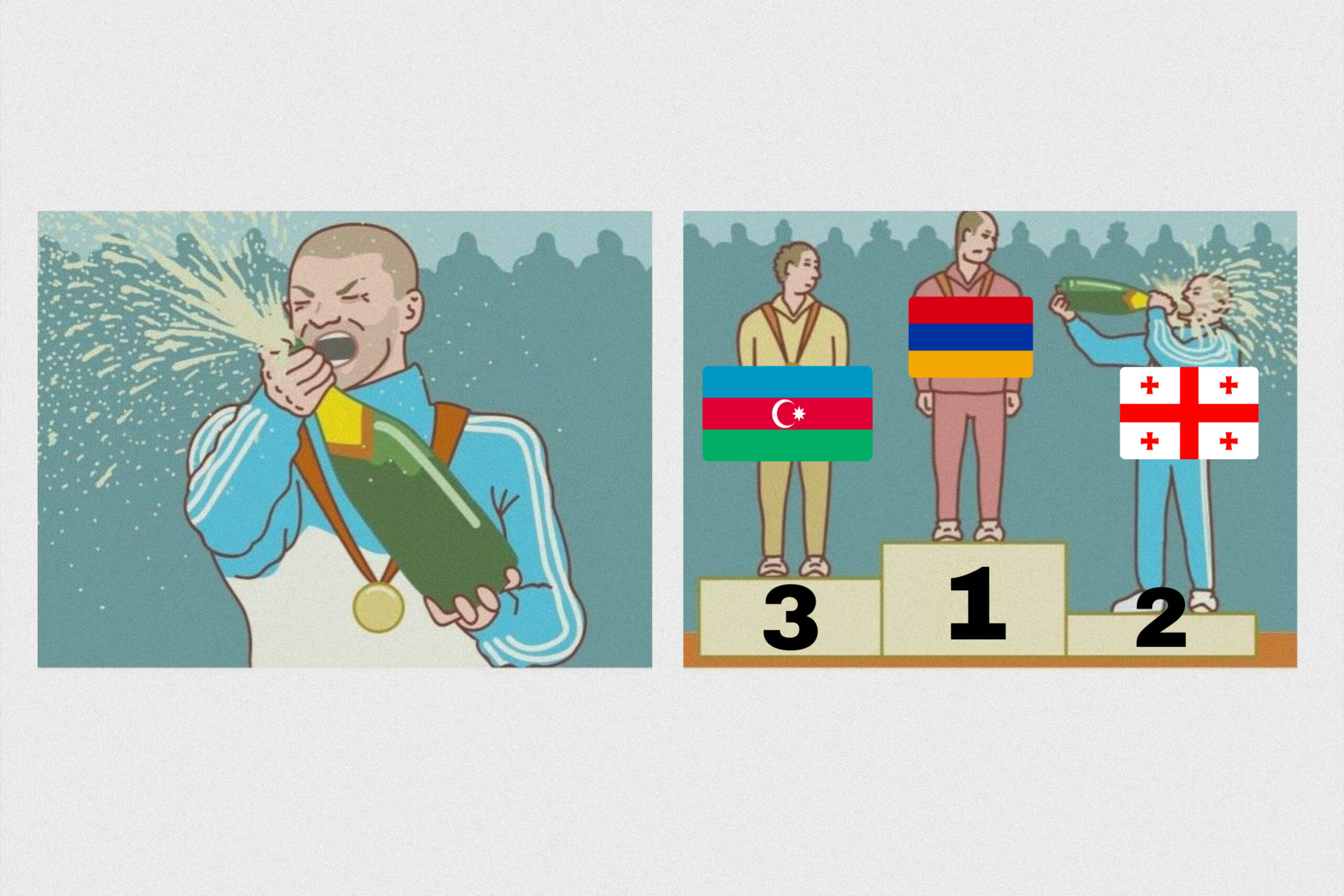
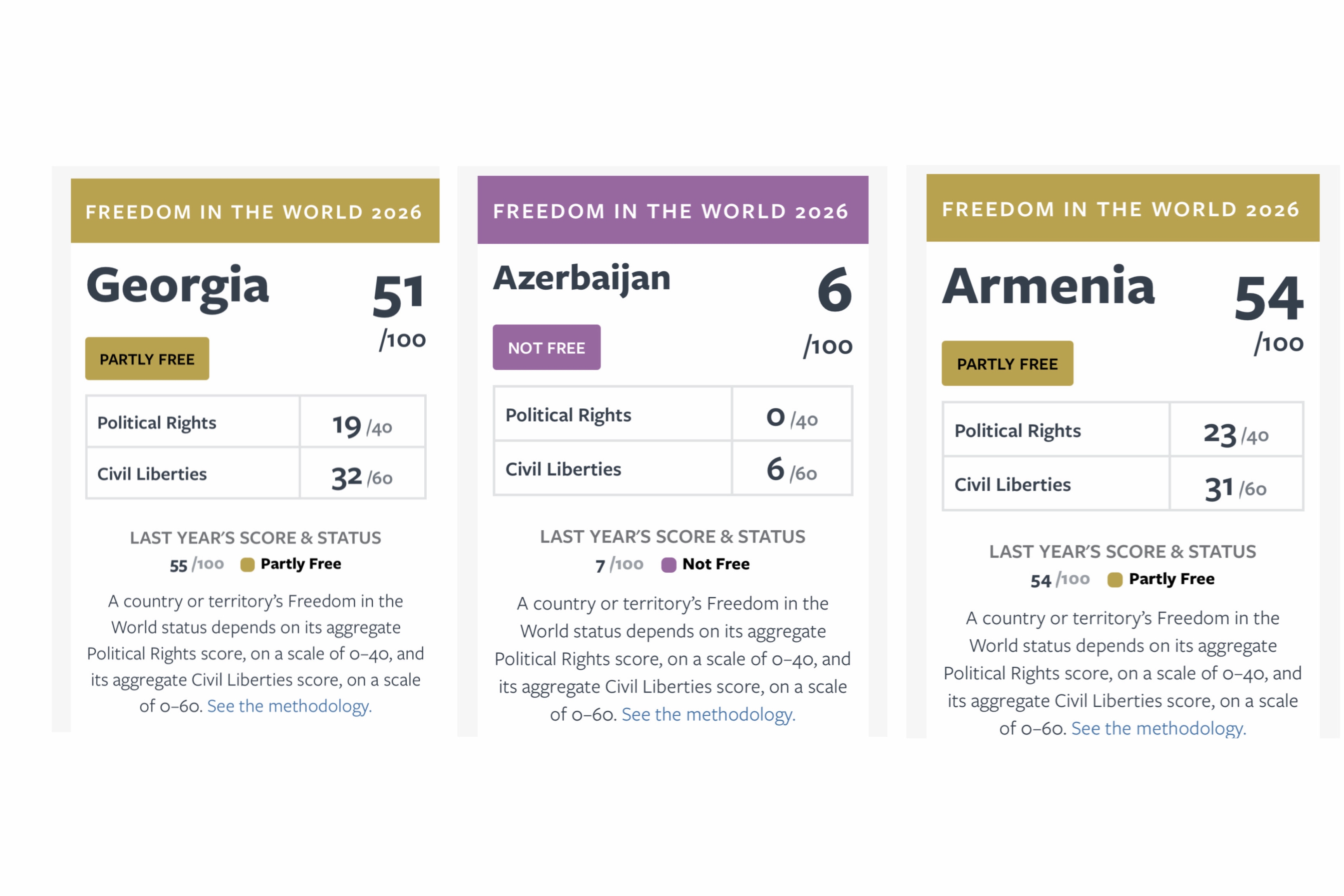
    Georgia has been the democratic champion of the South Caucasus for more than a decade. Today, that hierarchy has flipped. Currently, Armenia has a score of 54/100 and Georgia 51/100 (Freedom House, 2026). This brief breaks down the mechanics behind this shift. The reason for Armenia’s lead is not a recent democratic movement, but rather the fact that it has been able to safeguard the fundamental principle of civic pluralism and the separation of big business from the state since 2018. In the meantime, Georgia’s downfall is directly due to the ruling party taking control of the country from top to bottom, and the EU has been frozen in its tracks.

    The South Caucasian old geopolitical game theory is that the region can be divided into three neat boxes: an absolute autocracy in Azerbaijan, a fragile hybrid state in Armenia, and a reforming, pro-Western democracy in Georgia (Broers, 2020).

    That playbook is out of date, and it’s time to move on. Armenia has jumped ahead of Georgia in the world’s rankings for freedom. The baseline scores of its neighbors have been reversed (Freedom House, 2026), while Azerbaijan is still completely unfree at 6/100. This short argues that the actual domestic causes for this change are quite different: how Armenia’s institutions survived strong security crises and how Georgia squandered its chance for democratic development and European integration.

    The Numbers Behind the Realignment

    The regional shift comes down to aggregate scores eroding on one side while holding firm on the other.

    Freedom House, 2026

    The data makes one thing clear: Armenia did not jump ahead through a massive democratic leap forward. Instead, Yerevan maintained its post-2018 baseline while Tbilisi went into a managed institutional tailspin.

    How Armenia Maintained its Baseline Alive

    In a surprising twist, Armenia’s lead comes despite the severe external shocks it has endured, such as a devastating war last year and a sudden surge of over 100,000 people displaced from Nagorno-Karabakh. In most fragile hybrid regimes, such crises culminate in an executive power grab or complete the breakdown of democracy. For three reasons, Armenia didn’t take that route:

    • Before 2018, Armenia’s economy and government were managed by a closed oligarchic club (Gasparyan, 2023). These economic monopolies are effectively separated from the legislature by reforms after the revolution that clean up public procurement and allow anti-corruption watchdogs to function.
    • The real test was in the snap 2021 parliamentary elections immediately following the crushing military loss. The elections were clean, highly competitive, and carried out without hindrances (Donabedian, 2022), despite the anger of the societies. Most importantly, everyone accepted the results, and the ballot box was the only means of wielding power.
    • Decentralized Media Scene: Armenia’s online environment is disorderly, competitive, and “free.” An open media market is a good restraint on the executive branch, as there is no dominant state broadcaster that can dominate the narrative entirely.

    The Reality Check: Armenia is far from perfect. There is still a risk of political pressure on the judiciary, and the government still heavily depends on long-term pre-trial detention of political opponents (Human Rights Watch, 2024). These are institutional shortcomings, however, and not a conscious, government-based effort to crush political opposition.

    Inside Georgia’s Top-Down Slide

    In contrast, Georgia’s democratic decline is an active, top-down strategy run by the ruling Georgian Dream (GD) party. This is intentional abuse of a state authority to eliminate political competition (Lebanidze & Kakachia, 2023). It operates via three main streams:

    • In Georgia, the real power has been transferred from official government institutions into the hands of billionaire Bidzina Ivanishvili and his informal networks, a concept of shadow governance. This shadow control has allowed the ruling party to fill courts and change the rules for the Central Election Commission, which would have to include some multiparty avenues.
    • Parliament has been systematically used by the government to stifle civic space, or what is known as the weaponization of the law, and the EU rupture. The adoption of the restrictive ‘foreign influence’ law was done with the clear intention of curtailing access to funding for independent NGOs and media watchdogs (Jones & Kakachia, 2024). This was a step that severed Georgia’s ties with the West. The European Council in Brussels finally suspended millions of dollars in military assistance for Georgia and froze its path to EU integration (European Council, 2025). In response, the government upped the ante, officially suspending EU accession talks until 2028 and making the country an EU “candidate” in name only.
    • When the government suspended the EU negotiations, it sparked huge and sustained street protests known as “street violence and intimidation.” The state responded in a forceful manner. In addition to riot police, international monitors recorded coordinated attacks by plainclothes security personnel who physically attacked and beat opposition leaders, journalists, and activists outside their homes (Amnesty International, 2024).

    Geopolitical Fallout

    Democratic progress is a non-linear process. Georgia is a testament to the fact that achieving integration success, such as EU candidate status, doesn’t mean anything if the elite at home decide to seize control of the state. By contrast, Armenia demonstrates how a civic base can be established to withstand extreme national security crises by dismantling oligarchic monopolies.

    The new political shift in Georgia has led to a tremendous change for the entire region. Georgia’s isolation directly impacts Armenia, which relies on Georgia for 80% of its trade routes to Europe. Western partners have to adjust rapidly: support for democratic institutions in Armenia should go straight to support its vulnerable institutions, and unambiguous, targeted financial and travel sanctions should be imposed against the Georgian political actors behind state capture.

    References

    Amnesty International. (2024). Georgia: Freedom of peaceful assembly under siege. Amnesty International Report. https://www.amnesty.org

    Broers, L. (2020). Armenia and Azerbaijan: Anatomy of a rivalry. Edinburgh University Press.

    Donabedian, A. (2022). Post-war elections and democratic resilience in Armenia. Journal of Caucasian Studies, 7(2), 145–168.

    Eshment, B. (2021). The legacy of the Velvet Revolution: Post-revolutionary institutionalization in Yerevan. Central Asian Survey, 40(3), 312–329.

    European Council. (2025). Conclusions on enlargement and the de facto halting of Georgia’s accession path. European Council Presidency Report.

    Freedom House. (2025). Freedom in the world 2025: The democratic cost of regional backsliding. Freedom House. https://freedomhouse.org

    Gasparyan, A. (2023). De-oligarchization and public procurement transparency in post-2018 Armenia. Caucasus Analytical Digest, 134, 3–9.

    Human Rights Watch. (2024). World report 2024: Events of 2023. Human Rights Watch. https://www.hrw.org

    International Crisis Group. (2026). Managing Georgia’s turn against the EU. Watch List 2026 – Spring Edition. https://www.crisisgroup.org

    Jones, S., & Kakachia, K. (2024). The polarization of Georgia: Oligarchic capture and the erosion of the third wave. Routledge.

    Lebanidze, B., & Kakachia, K. (2023). Informal governance and democratic backsliding in the EU’s neighborhood: The case of Georgia. European Foreign Affairs Review, 28(1), 45–66.